The Big Difference Between Heads-Up and Multiway Poker
Multiway poker is the most prevalent form of the game, both online and in live settings. For over a decade, solvers like PioSolver—and later GTOWizard—have helped us master heads-up and simple postflop spots. But the multiway landscape remained largely uncharted. Now, a groundbreaking step in AI poker solving is changing that. With GTOWizard’s new 3-way solver, we can finally explore the hidden dynamics that make multiway play so complex—and so fundamentally different.
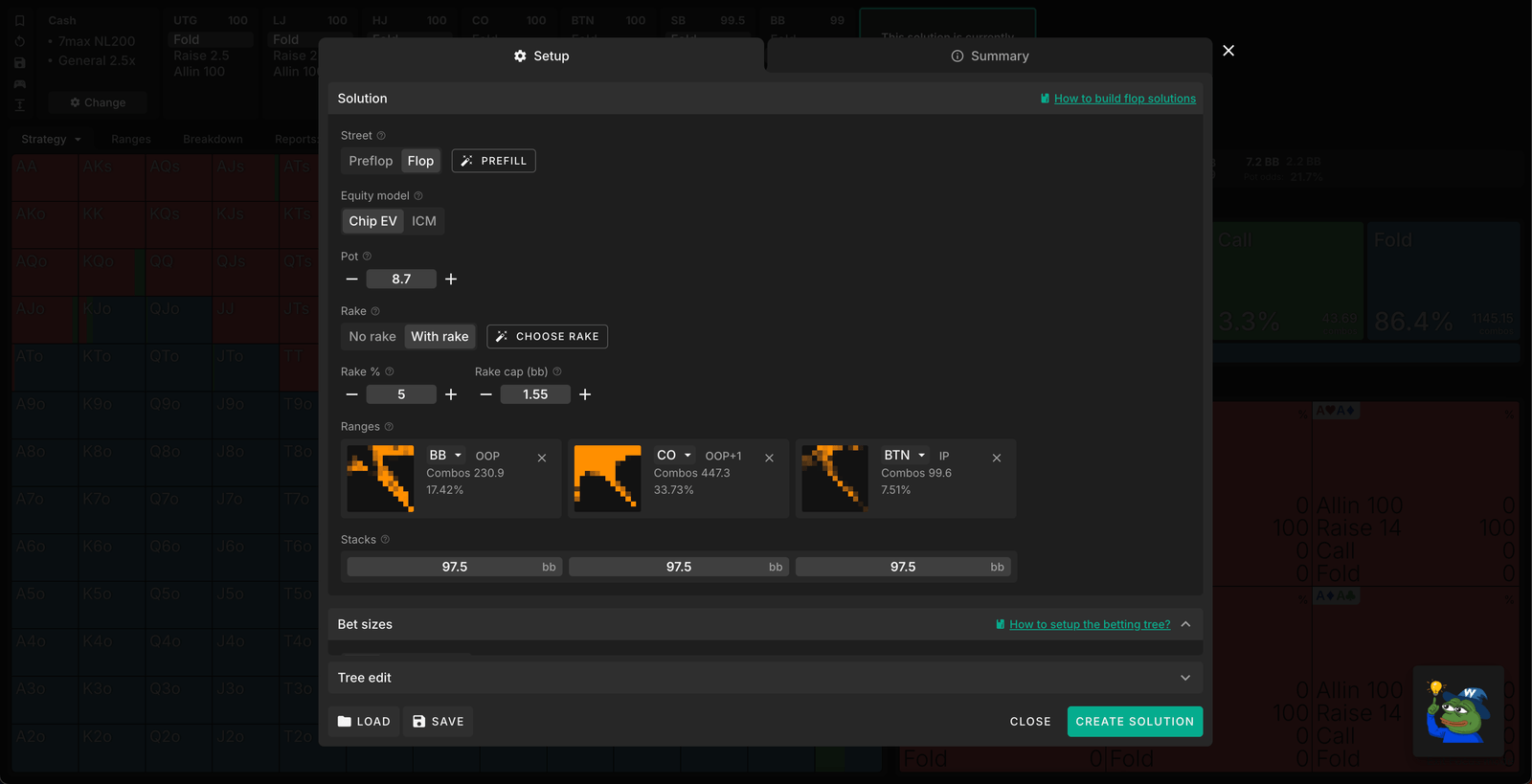
In this article, we’ll unpack why multiway poker is a completely different ballgame than heads-up. We’ll start from a theoretical standpoint, then dive into the solver for practical lessons.
Nash Equilibria Collapse: Unintentional Cooperation Emerges
Heads-up poker is a uniquely stable environment. Game theory proves it will always have at least one Nash Equilibrium (NE)—a perfectly balanced point where neither player can gain by changing their strategy. This stability comes from the elegant symmetry of two-player zero-sum: whatever one player wins, the other loses in equal measure.
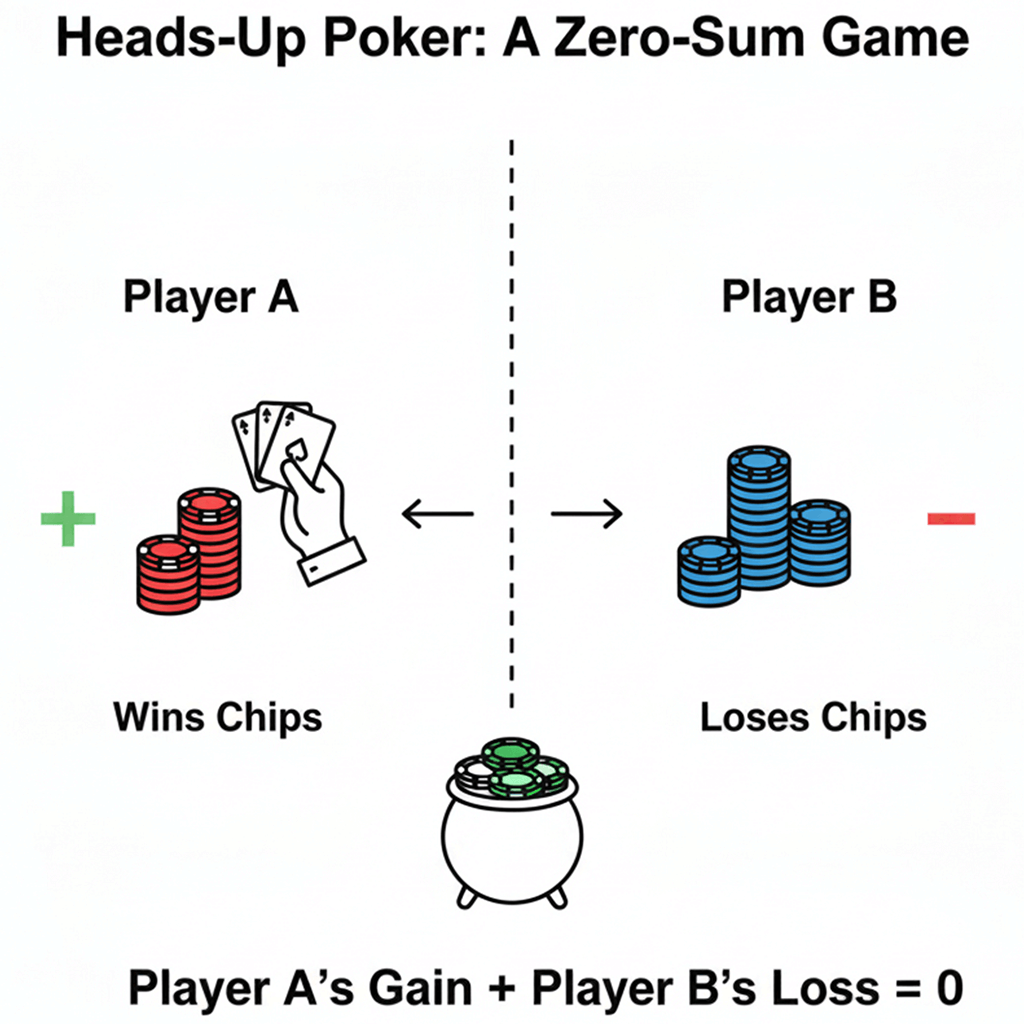
But the moment a third player enters the pot, that clean balance easily collapses. The game is still zero-sum overall—money only moves between players—yet it no longer fits the tidy structure that guarantees a single, stable equilibrium. Multiple fragile balances can exist, each easily disturbed by the smallest shift in ranges or incentives. In this new landscape—largely uncharted even for game theorists—something fascinating happens: **cooperation emerges**, intentional or not.
The reason is simple. In heads-up play, every chip you win comes directly from your opponent’s stack. It’s a pure duel where their loss is your gain. But the moment a third player joins, that iron rule breaks. You can now make a play that hurts Player C far more than Player B. Suddenly, you and Player B share an unspoken incentive: to extract value from the third player. By independently targeting the weakest link, your selfish strategies align perfectly. This is how cooperation emerges from pure self-interest.
In heads-up, you can't 'work together'; in multiway, it's at least possible, so it starts to happen when the opportunity arises. This dynamic is precisely why Nash Equilibria in multiway poker are not only unstable, but also incredibly difficult for solvers to converge to.

Finding Some Practical Truth in the multiway Maze
So if the game’s balance collapses so easily, what’s the point of even trying to find equilibrium?
The truth is, strong strategies can still be found using the same Counterfactual Regret Minimization (CFR) techniques that modern solvers are built on. It’s about accepting that unintentional cooperation can exist—and that multiway equilibria are more delicate—while recognizing there’s no better alternative. We can still run CFR and find strong strategies we can learn from. It offers a baseline of play — a starting point for us to go our own way, because we know our opponents will go THEIR own way. We just have to make sure we go in the right direction, while they stray into “being owned” territory—ideally, with our own strategy subtly steering them there.
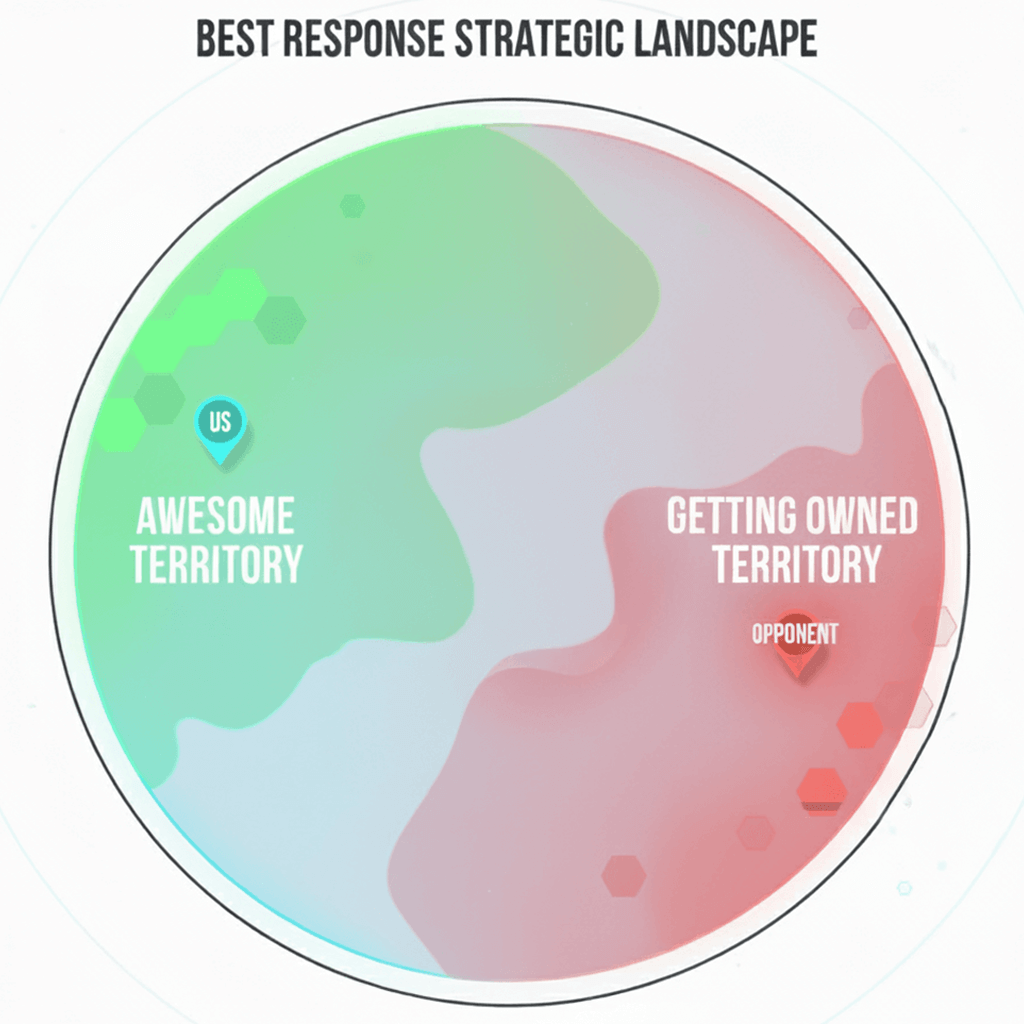
And while solving multiway is tricky and imperfect (still), GTO Wizard tackled this challenge very impressively, using cutting-edge deep learning to approximate strong 3-way equilibria. But we must remember: these GTO strategies aren’t set in stone. Any tiny deviation by a single player can throw the entire system off, setting off a chain reaction of adjustments.
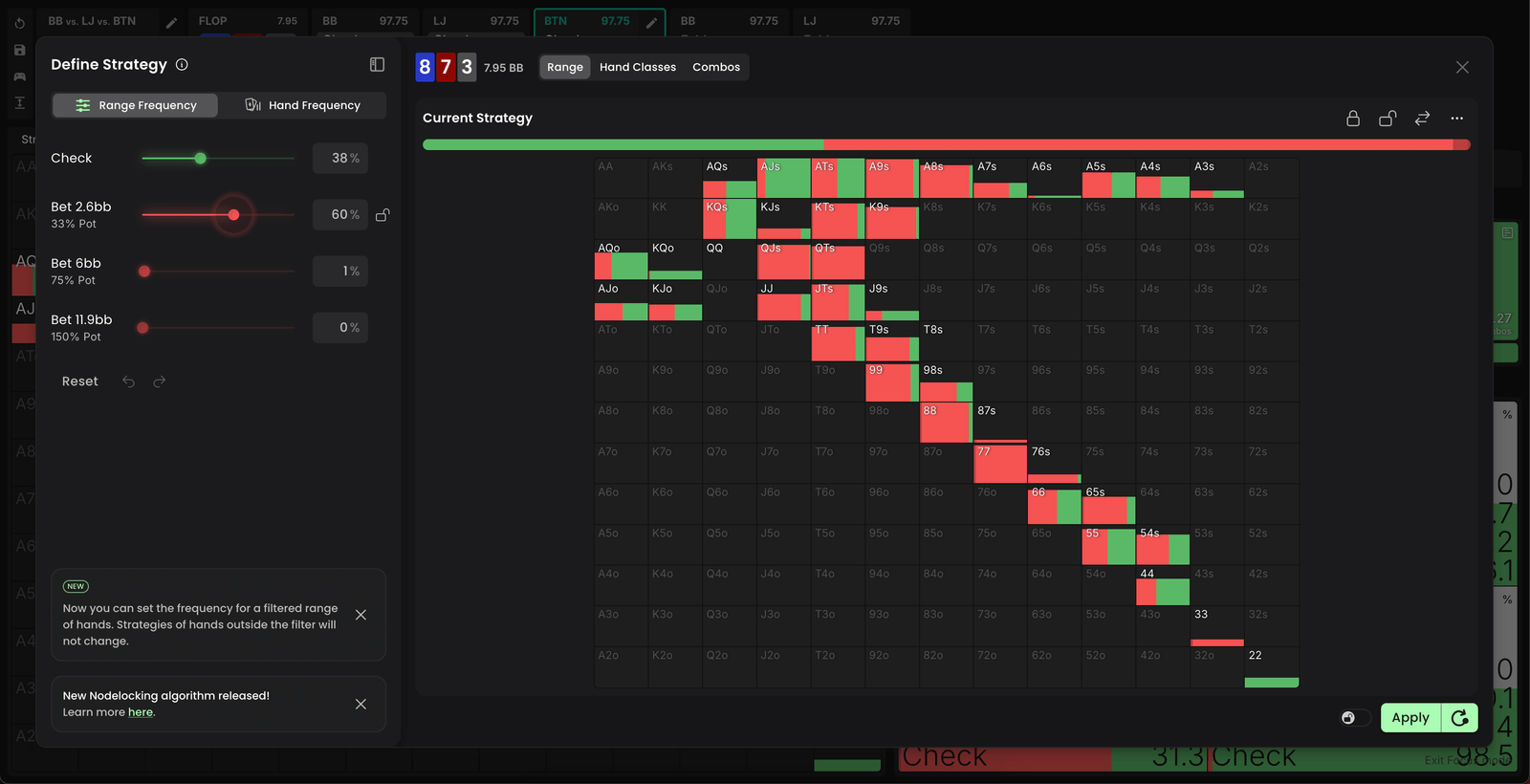
That’s why, while studying GTO remains our essential baseline, we should recognize that the best *real-game* response often lies farther from the solver’s “perfect” solution than in heads-up play. Multiway balance is inherently fragile—it shifts, breaks, and reforms with alarming speed the moment imperfect humans are involved. That’s where node-locking becomes powerful. GTO Wizard’s intuitive interface makes experimenting with these deviations seamless, allowing us to craft realistic, exploitative adjustments grounded in theory. Exploitation is vital in multiway poker, perhaps more so than in heads-up poker, and node-locking is a phenomenal tool to practice this skill.
Some Practical Lessons From the 3-Way Solver
There are still many open questions in game theory about multiway poker, so let's leave the deep theory there and dive into the solver for some practical lessons.
In heads-up sims, we often see a lot of mixing on the flop for most combos. In multiway sims, now beautifully visible in GTOWizard's 3-way solver, we often see a preference for either a passive or a more aggressive approach with our full range.
The most important factors to this are range and nut advantages, but perhaps even more so the relative position to the other players and the actions they have taken. Yes, things get complicated there, but let's take a look.
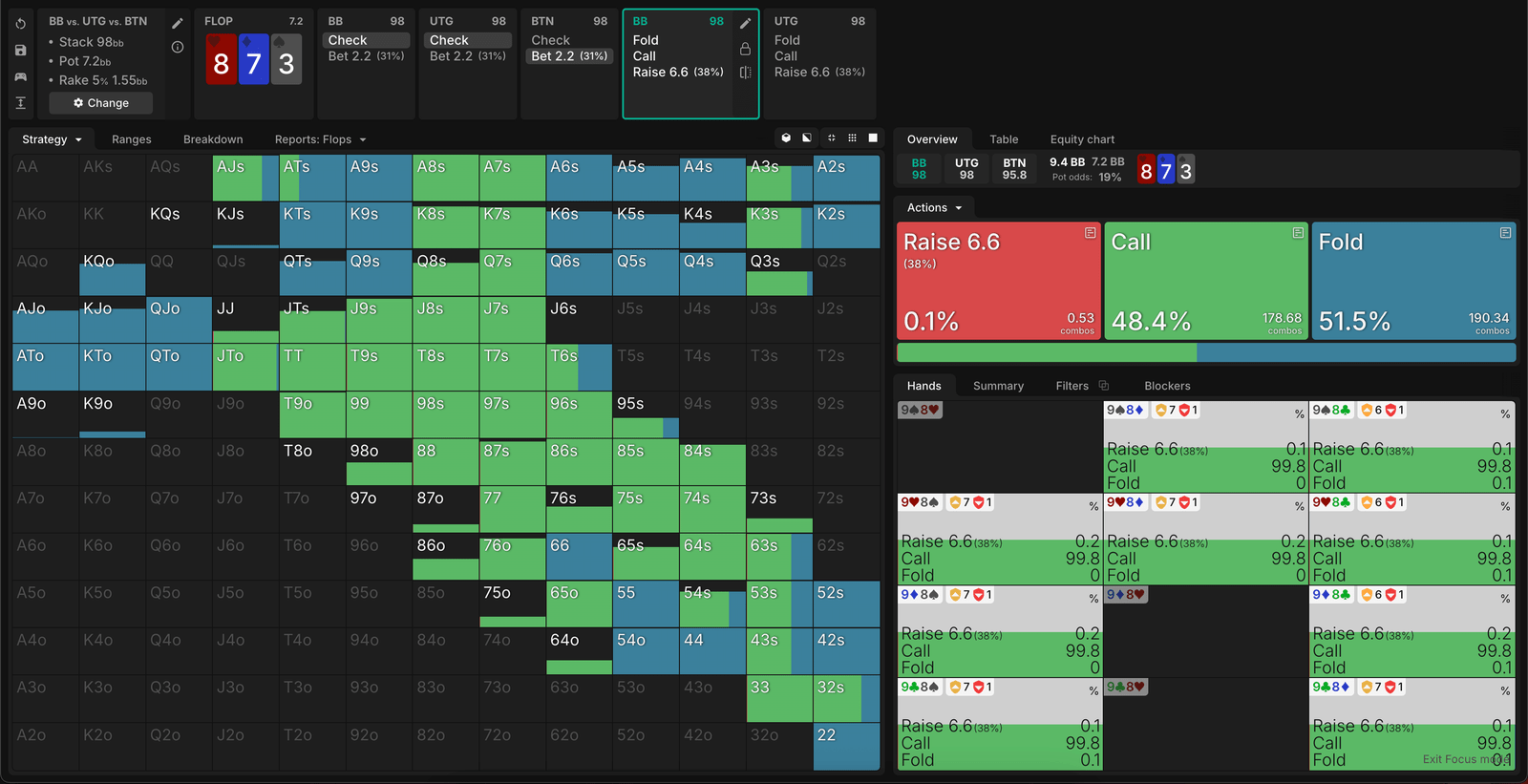
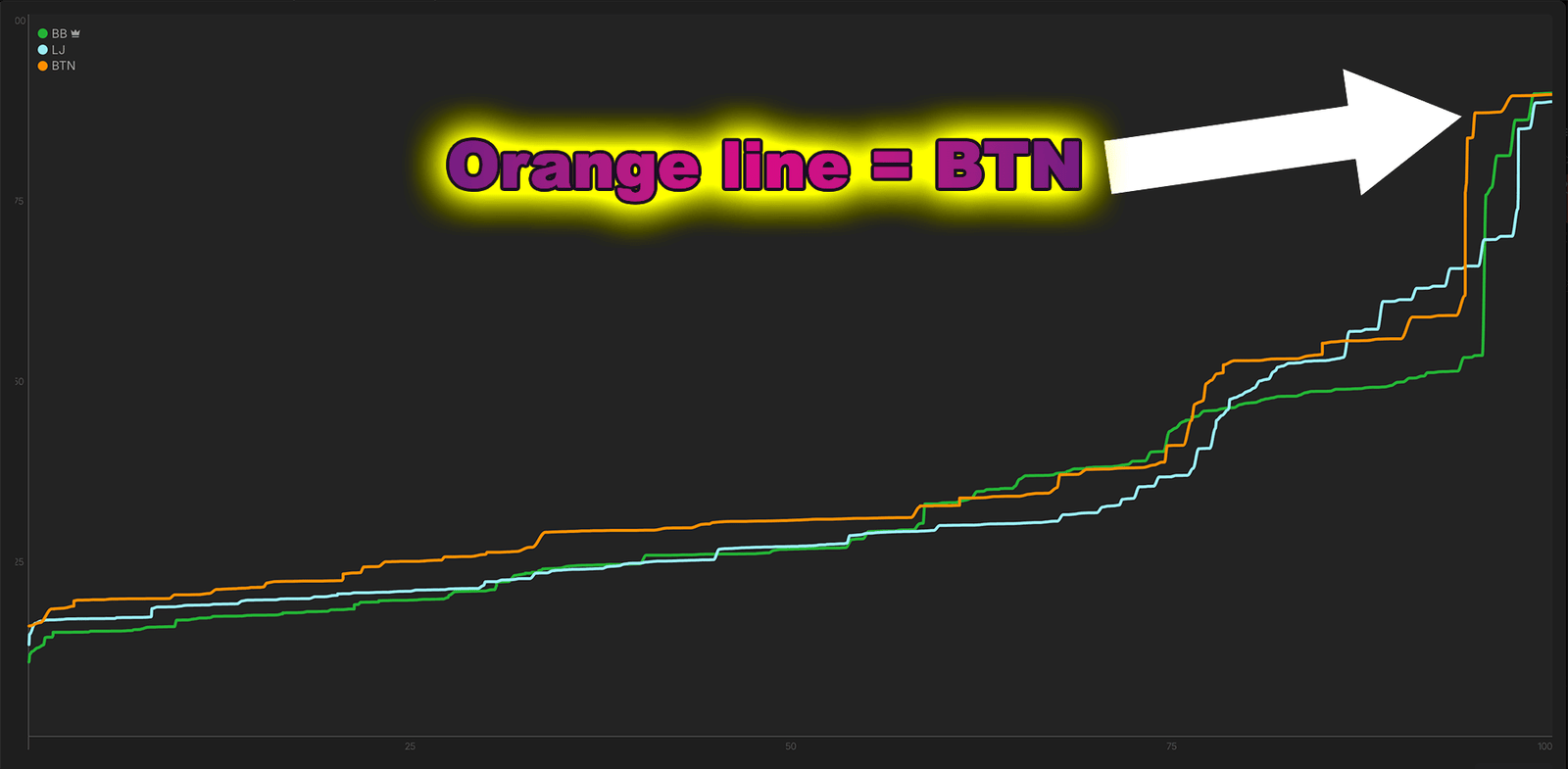
This is a situation where the low-jack (LJ) raised from early position, the button (BTN) called, and the big blind (BB) completed. 3-way to the flop and both the BB and the LJ checked range, because BTN has a pretty tight range and one that hits the flop quite well. We can see in the following equity chart that the BTN has a nut advantage.
And even though the BTN bets a lot (over 62%) in this situation, the BB still doesn't have any raises, and sort of has to respect the BTN's nut advantage, his tight range hitting the board well, while the BB has the widest range with the most marginal hands as well. It 'respects' the button and calls with all the hands he wants to continue with, including marginal hands that want to see a turn, and monsters like 88 or 77.
Now let's take a look at what happens when the BB calls the BTN's bet.
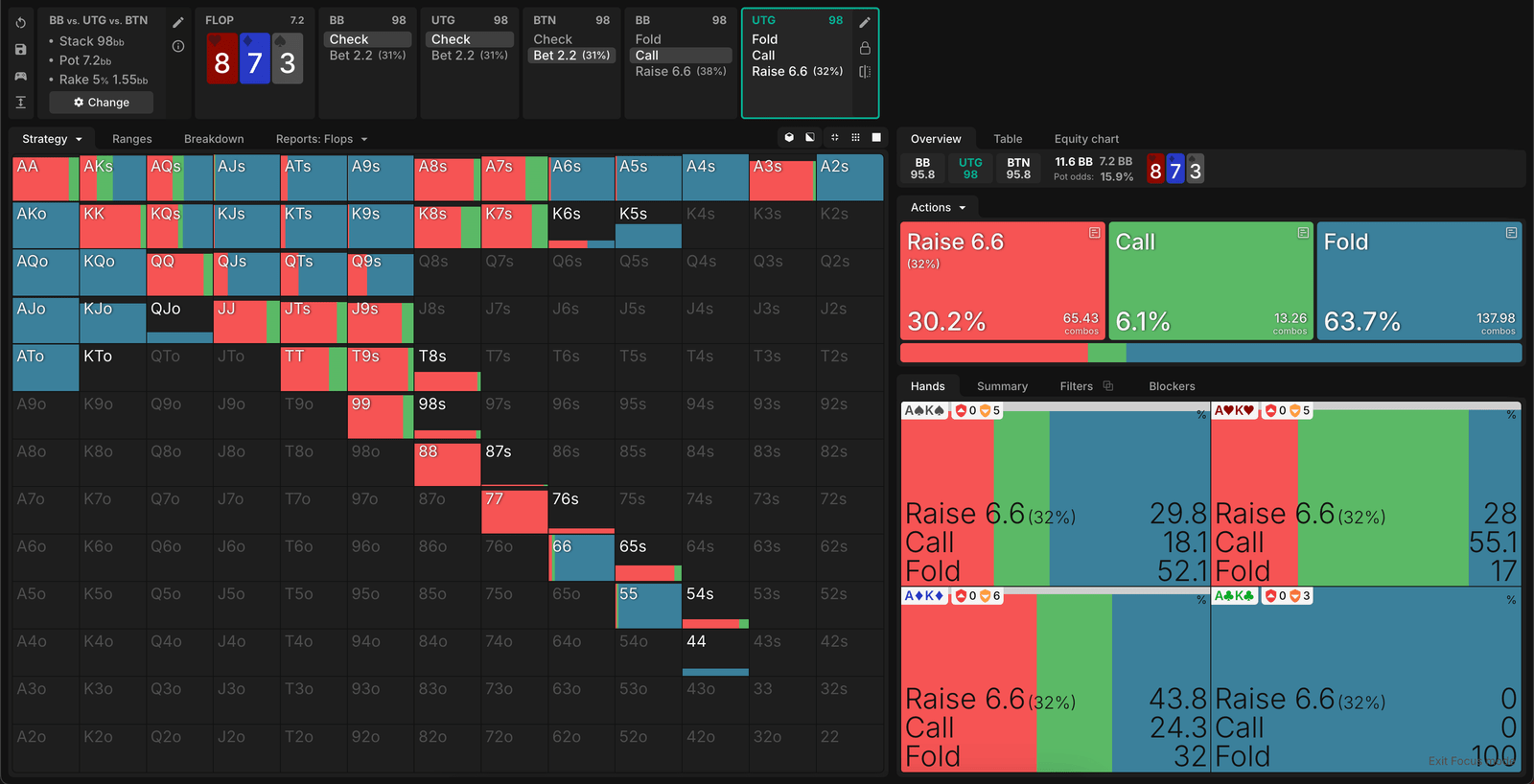
We can see that the LJ is doing quite the opposite from what the BB was doing, it is mostly raising when continuing! There are quite different dynamics at play here; even though the LJ is sort of 'in the same hand', the situation is totally different!
Both the BB and the LJ were actually range-checking to the BTN (who held the nut advantage). But the LJ's range is much stronger than the BB's of course, at least because of all those nuttish overpairs the BB doesn't have. It is also much tighter so marginal hands that don't hit this board are removed from the LJ's range (but not from the wider BB's range).
So that is one thing, but also, the LJ has two players that put money in the pot; if he calls, he has to keep on fighting it out versus two players, it's going to be hard to see a showdown and realize equity with his marginal hands. That means that calling becomes less attractive. Versus two players, a lot can happen that disallows you to see a showdown, and even if you get to see one, you still have to hope that your hand wins versus two players (instead of one). Not desirable. Calling sort of 'sucks'.
But he does have a lot of strong hands though, that good ol low-jack. What if he can leverage those to also raise his more marginal hands (like top pair, mid pair, draws); it would be a great idea because he can drive people out (maybe even both), increase his equity in the pot.
You see there how multiway poker becomes a true fight; driving people out, clearing equity. Not passively over-calling, hoping for the best. Instead, we can utilize our range and nut advantages to be aggressive with range, drive (still) dormant opponents out, clear equity, increasing our chances of winning the pot.
Let's take a look at a completely different board now.
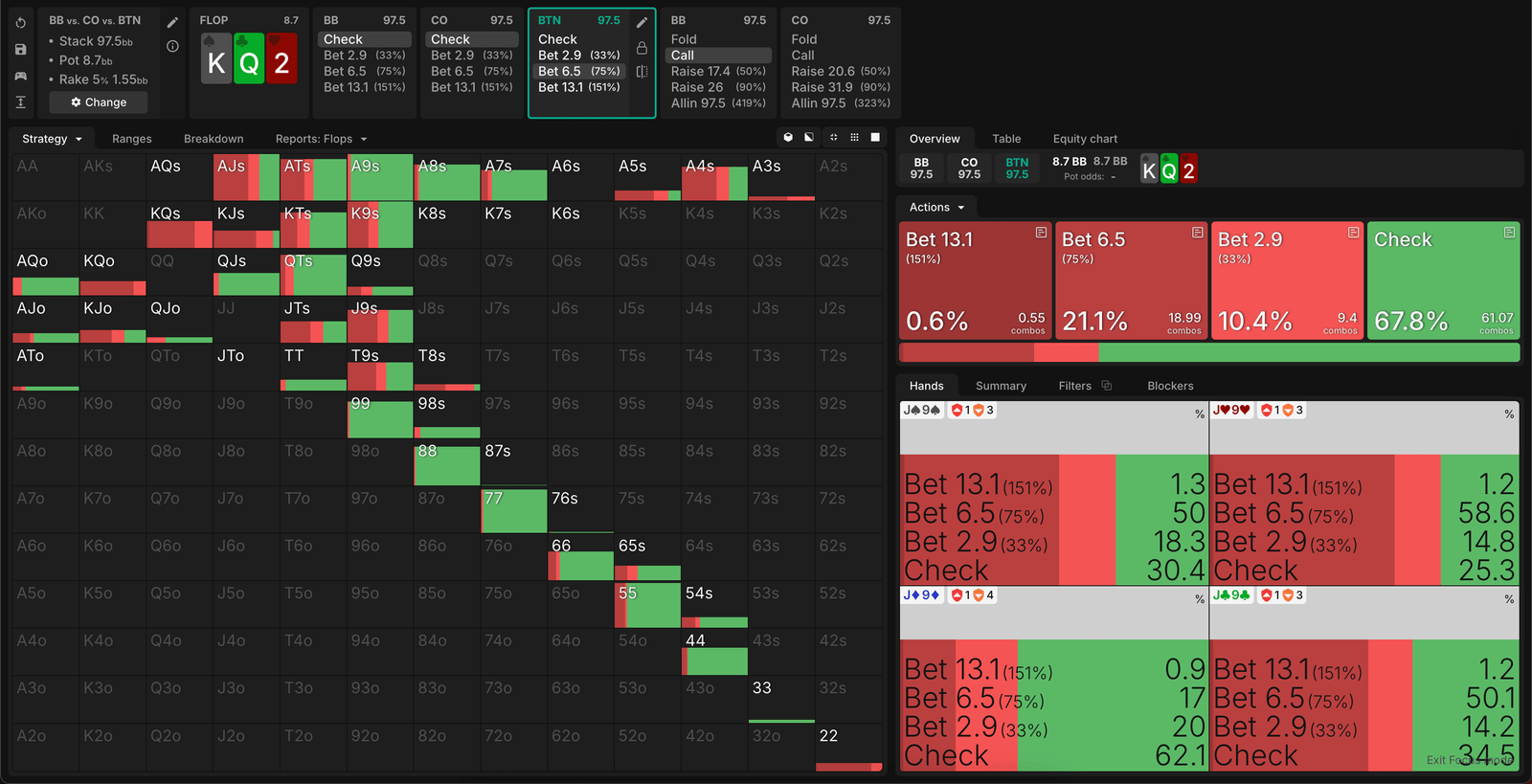
This is CO vs. BTN vs. BB. The above chart shows the button's decisions, and he is mostly betting a bigger size (72% pot) when he bets, a more polarizing strategy than on the previous board. Now, let’s take a look at BB’s strategy against BTN’s bigger bet:
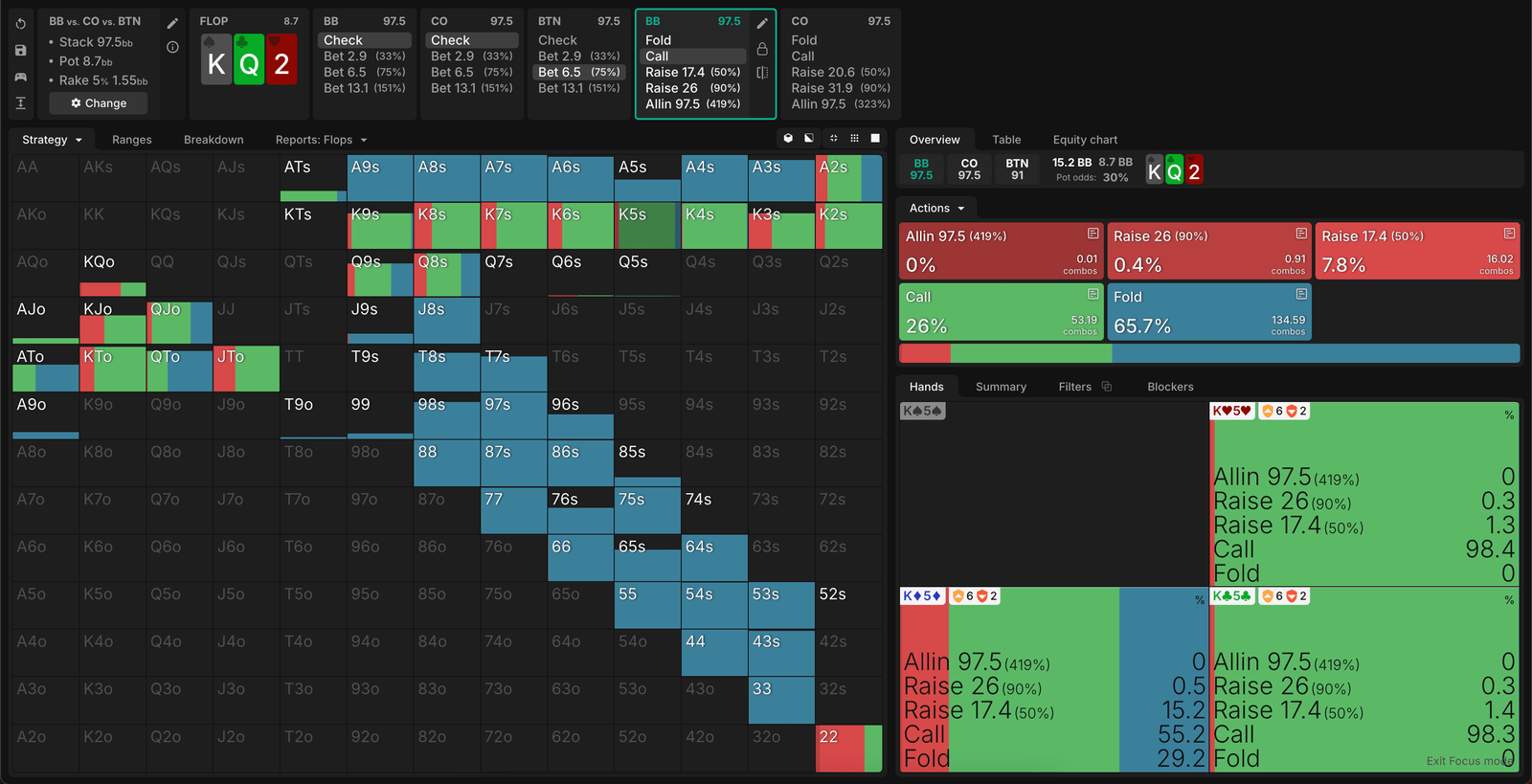
We see in this spot that the BB is not really leaning too much to one or the other with his range; it is a more fair mix of calls and raises, but definitely more calls, as he has to sort of respect the bigger bet of the BTN (makes sense).
If you look closely though at the K5 of diamond, you can see it is folding a little bit. Yes, the BB is actually folding some top pair on the flop to only one bet! That would never happen heads up, at least not to a sort of standard 72% pot size bet!
Now on to the CO's strategy IF the BB calls here.
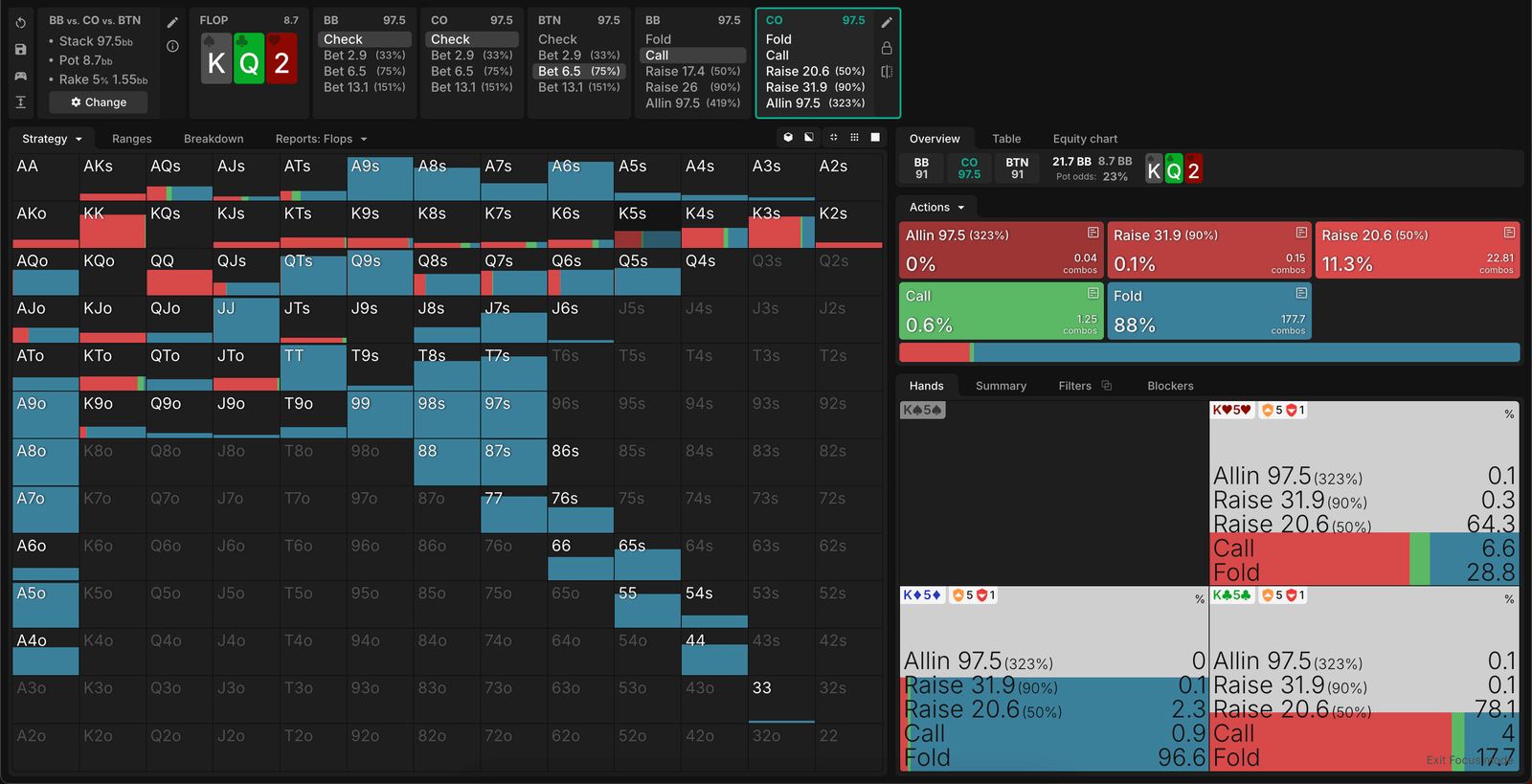
And there we see that pattern again; the CO doesn't want to mess around calling with mediocre hands, hoping for the best. It is raising aggressively with the hands it's continuing with, for the most part. And now that the BB called, we can see the CO is folding (or raising) a lot of top pair hands already!
Now we've seen situations where the BB's strategy to the BTN's bet was to only call (or fold), and with the last situation it was also raising a little. How about situations where the BB is mostly raising to a BTN bet in a multiway scenario? Take a look at the following scenario:
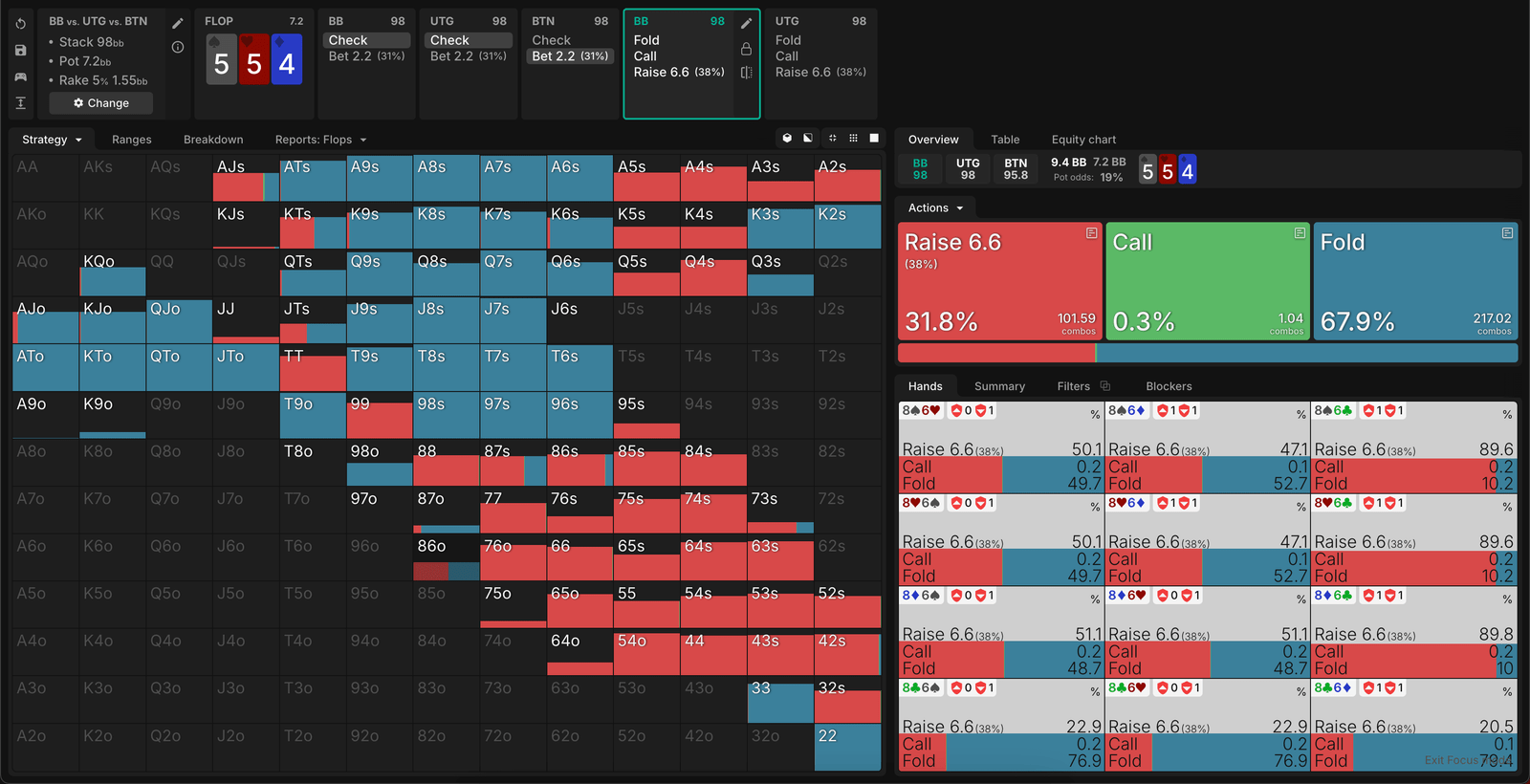
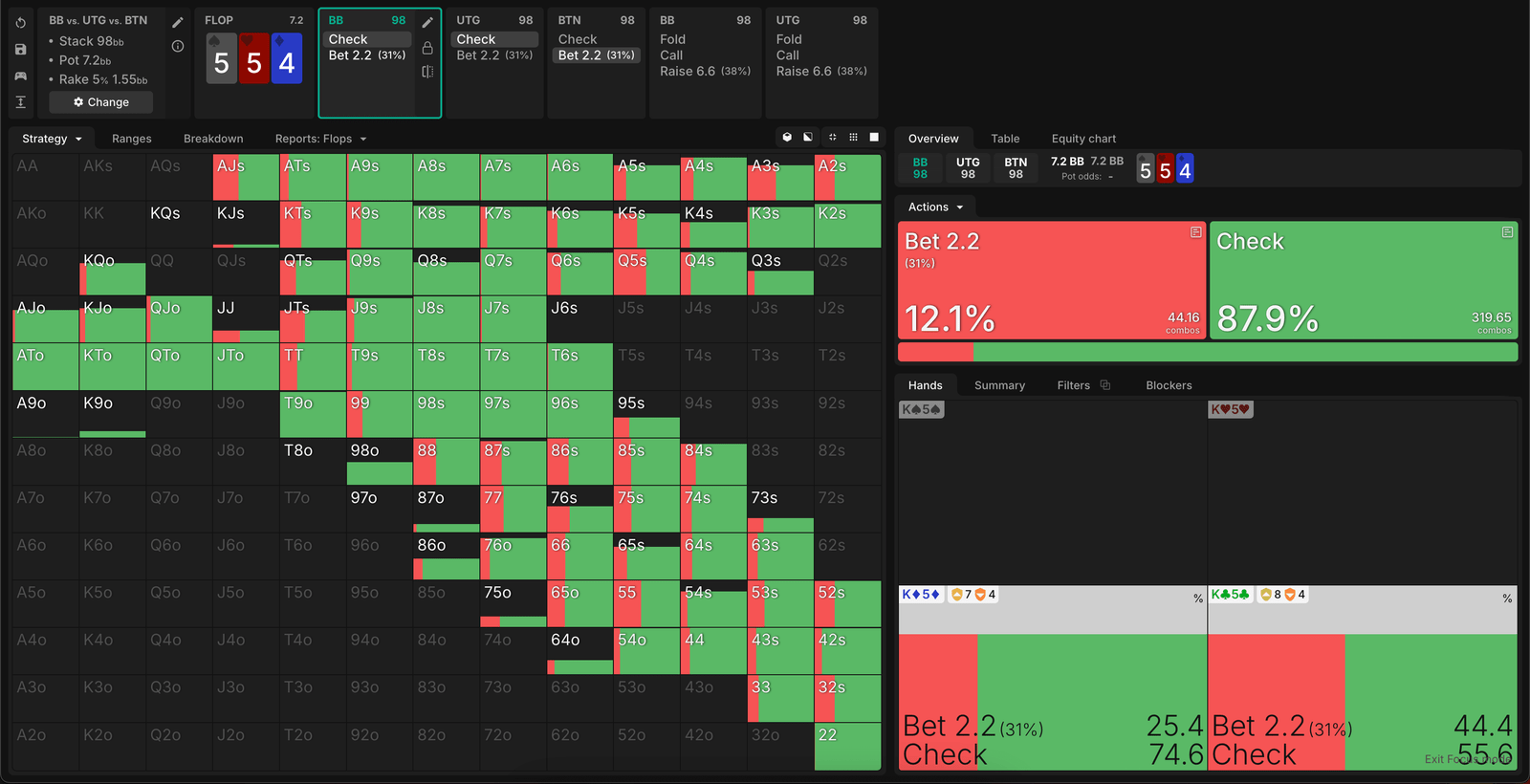
This is UTG vs. BTN vs. BB single-raised, with the BTN betting after BB and UTG checked the flop. The chart above shows the BB's strategy to the BTN's bet. We see it is only raising the hands it's continuing with.
Why is that? This is because the BB has a significant nut advantage when this particular flop arrives, and yes, you guessed it, it's about the amount of trips (fives) the BB has in his range compared to the others. We can even see that the BB is donking the flop a bit, and you can also see the BB has quite a lot of combos containing a five in it, more so than the UTG and the BTN, that are raising/calling with tighter ranges that are more high card (and less low card) oriented.
Also take a look at the equity chart (important feature by GTO Wizard) at that point in the hand (flop arrives and BB is to act).
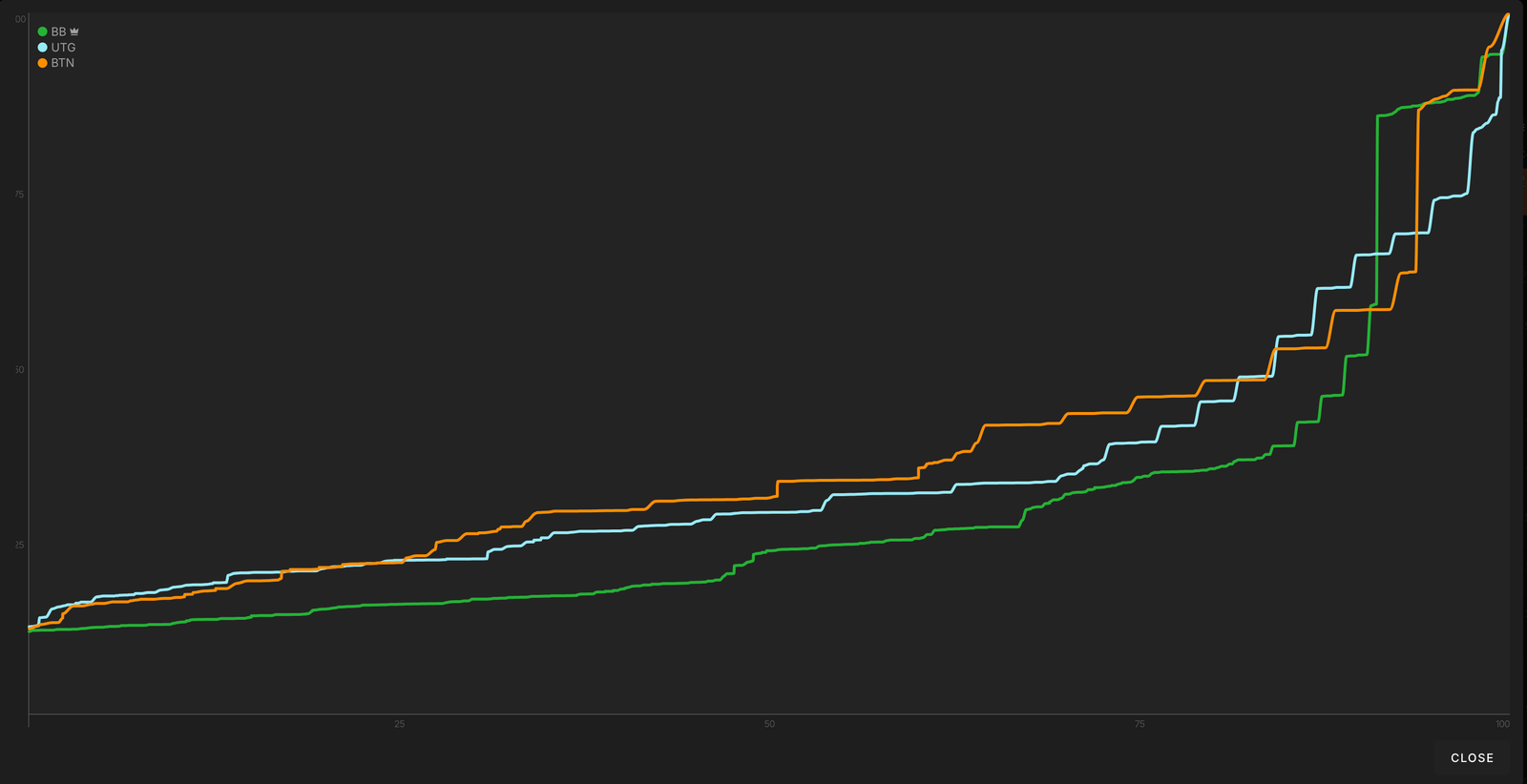
The green line is the BB, and shows a clear nut advantage. It really allows the BB to have that strategy of only raising the hands it continues with. Driving the other player(s) out of the pot is still a major accomplishment for most hands it wants to continue with, and all those trips in his range are just fuel, or ammo really, great leverage to use to drive people out raising with marginal hands and those trips alike.
Conclusion
The entire poker world is elated that we can finally discover the wonders of multiway poker so fast and seamless with the introduction of GTO Wizard's AI 3-way solver.
It's not everything, because multiway equilibria are shakier than a house of cards on an old truck, but man does it provide some clarity…

We saw how strategies can shift from 'range mixing' to 'range passive' or 'range aggressive' depending on range/nut advantages and relative positions. We also saw how adding one extra player to the mix causes us to start folding hands we never thought of folding to one single raise or bet.
The difference is stark; things change dramatically, but hail to GTO Wizard for bringing out this helpful tool to the public. Let's start studying multiway, and bring some order to the chaos!
Elevate your poker understanding and fuel your ambitions. Try GTOWizard today (for free)!
