
4 Reasons to RNG in Poker
In theory, you should only mix your actions if the expected value (EV) of those actions is the same. This is one of the first lessons we learn when we start dabbling with poker solvers. GTO strategies (Nash Equilibrium strategies) are constructed defensively to make the opponent indifferent in many, many spots. In turn, that opponent must mix across these indifferent actions to keep their opponent indifferent at connected nodes in the overall game tree.
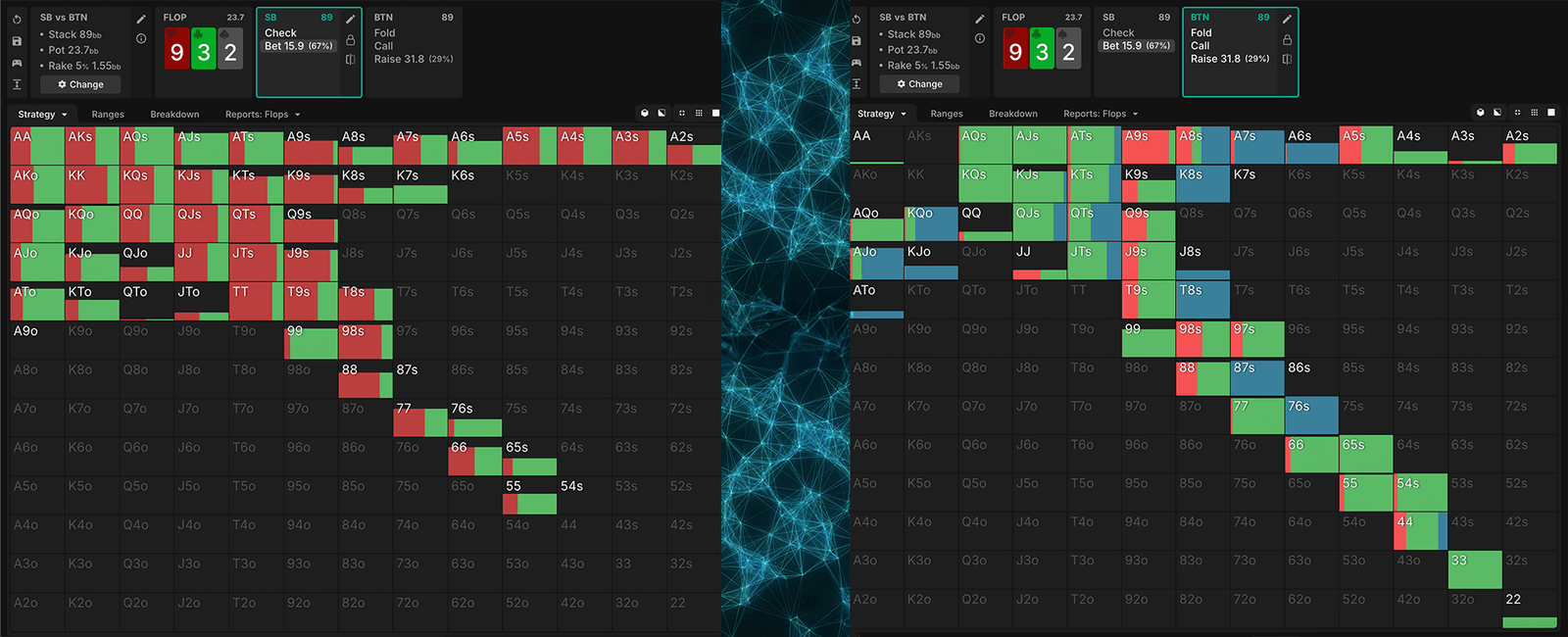
Confused? It doesn't matter. The point is that creating perfect indifference—where two or more actions have the exact same EV—is something solvers are designed to do. It is something that, realistically, humans aren't even able to do.
So if actions are rarely the same EV in practice, because humans cannot balance ranges like a solver, why should we ever mix? Why should we ever use an RNG? This article will explore why you might still want to use an RNG (at times), even if it doesn't make immediate sense from a pure EV standpoint.
Long-Term Exploitation
In theory, you'd want to exploit as much as you can get away with. But from what time horizon are we looking at this? Is it per decision, or are we maximizing our EV in the long term, thus exploiting people in the long run?
At what point will they adjust their leaks; at the point of you hammering at it too much? Exploiting in a way that maximizes long-term EV may sometimes mean that you are not fully maximizing EV in one decision. For instance, if you decide to still use an RNG even though it's pretty clear one decision has higher EV than the other.

Are you always bluffing this spot on the river, or maybe only 85% of the time? If someone is overfolding on the river, at some point they may still recognize you're bluffing them too much, and they fix that leak. You don't want that. In some situations, it might be best to subtly exploit your opponent by using an RNG, find the sweet spot, the optimal exploitative frequency of taking that action, instead of purely taking that action because it has the highest EV in a vacuum. If you get to subtly exploit your opponent for a certain leak for 10K hands, that's a lot better than him adjusting to it at hand 1000, in many cases.

Unpredictability and Deception
It is one of the first insights you gain when you're first starting out in poker: "You gotta be unpredictable." Deception Don't play your hands face up…
As you get deeper into poker, you learn that a lot of that has to do with keeping your ranges wide and balanced. You have to ensure that your opponent can't narrow you down to just a few hands—or in the worst-case scenario, only one—as you approach the river. GTO strategies ensure that this will never be the case, but the solver mixes most of its decisions to achieve this, especially on early streets.
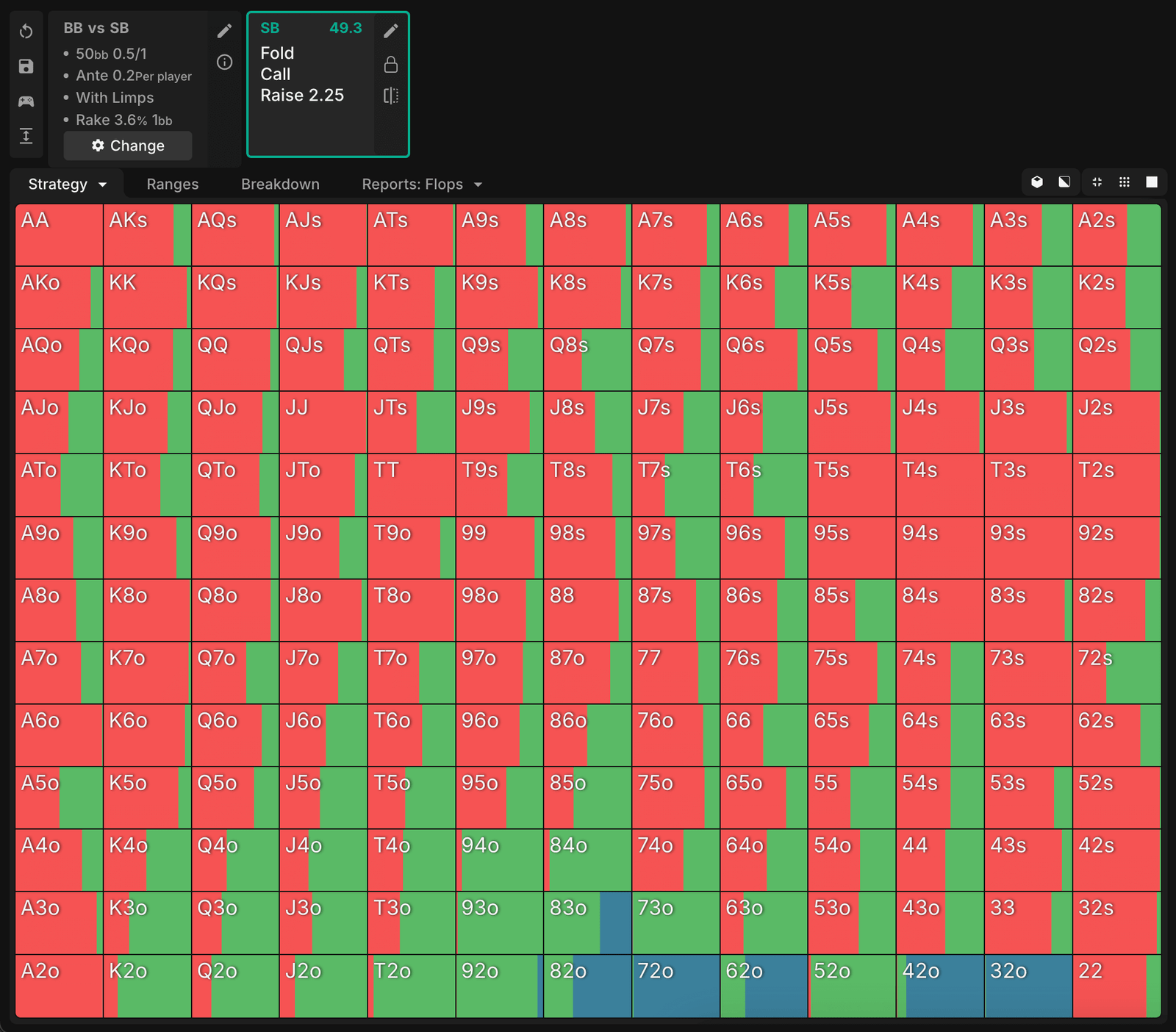
So theoretically, you should RNG your ass off. But we've also learned that in practice—and from a pure EV standpoint—we really shouldn't. However, the previous section discussed long-term exploitation: not getting too greedy so you can exploit under the radar. But does it make sense to 'roll' for deception and unpredictability?
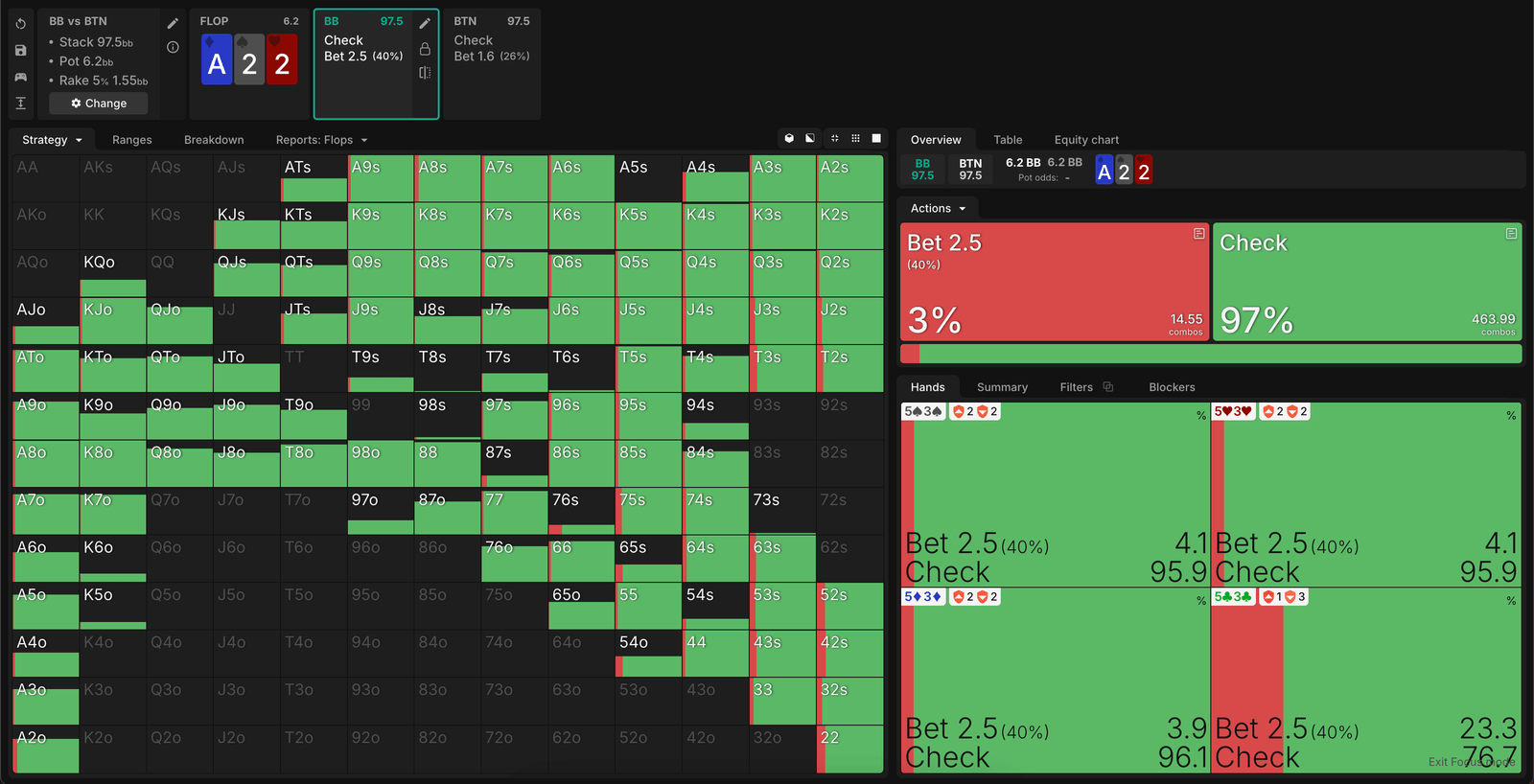
If a spot should theoretically be mixed but exploitatively, for whatever reason (feel, intuition, data, raw experience), you are leaning towards a certain action, you may still want to allocate a few percentage points to that unfavorable action. It can be a huge win if your opponent sees your hand when you do roll that 'unfavorable' action; you are almost never taking that action versus that opponent, though he/she might now think you are always taking that action. And you're really not giving up much doing that, but it adds tremendous depth and deception to your game, giving it this raw edge you may want to 'slice people with' at the tables…
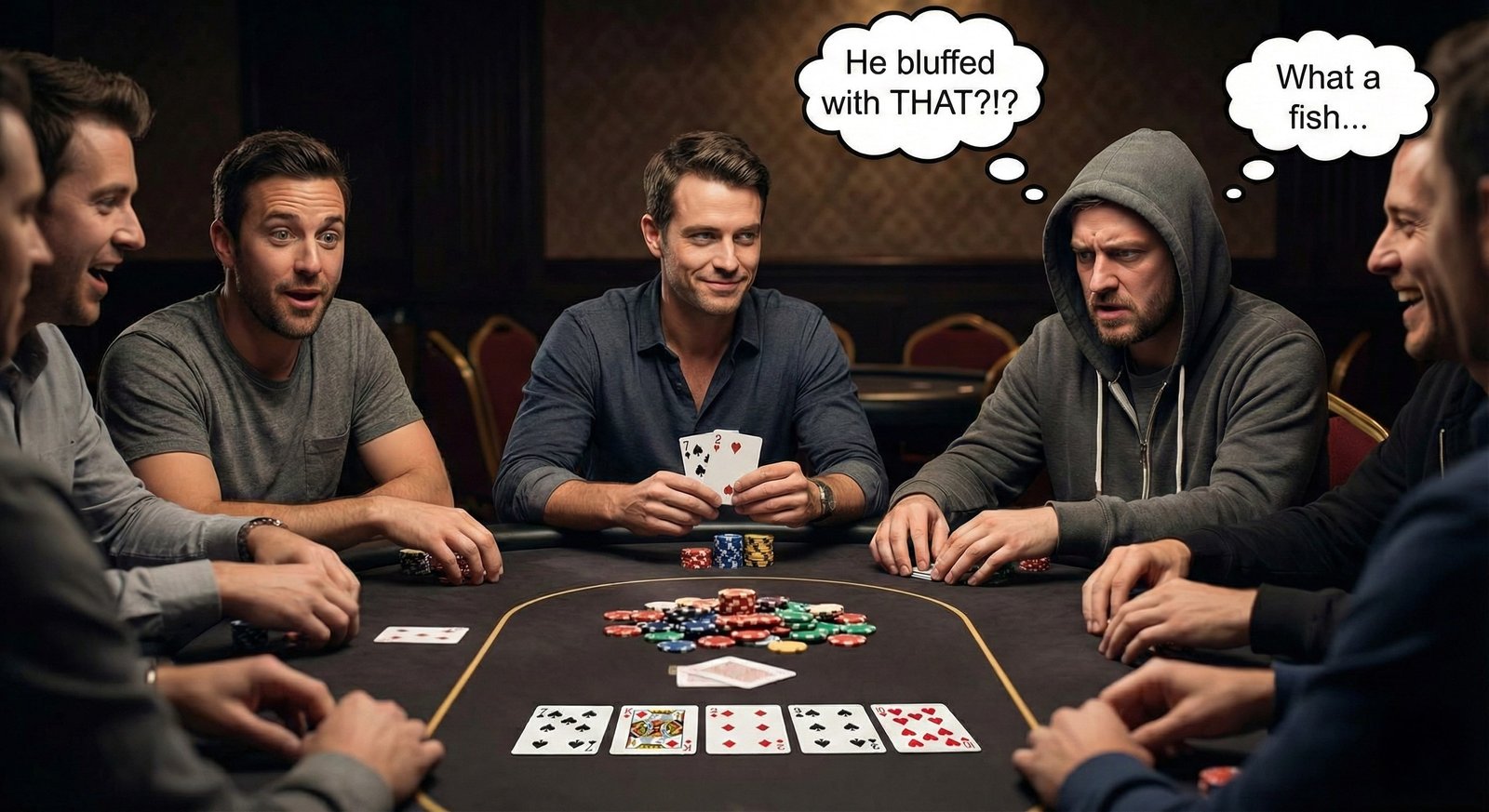
Many players have this bias where, when they see their opponent taking a certain action in a certain spot, they assume it's 'just what they do'. They falsely assume you are taking that action 100% of the time; then, if you were rolling that action 1 or 2 times out of 100 instead, that's great deception right there. If that low-frequency action you just took was indeed unfavorable against that specific opponent, the opposite (more favorable) action will now likely become more favorable if he/she indeed assumes you were taking that action purely.
And there we are already talking about when you are exploitatively shifting your frequencies versus exploitable opponents. Versus total crushers, where you may want to lean more towards GTO in certain spots, they also may be deceived if you take a certain action with an extremely low frequency. GTO strategies are full of such low-frequency actions, and if you find them against very good players, they might make the same mistake thinking you're taking those pure or with a relatively high frequency. This can be hugely beneficial and makes you wildly unpredictable in the eyes of your opponents. You may be seen as wild, dangerous, or even outright a 'fish'; they may see leaks in you that really aren't there, so you can start to fiercely counter-exploit them at will.
Emotional Detachment (Save Your Ego)
You know the feeling. You have thought deeply and intensely about a massive decision in a big pot. It feels close—razor close—but you convince yourself to pull the trigger.
And then... you're 'wrong'. You didn't just lose the pot; you got 'owned'. Your opponent anticipated your move and got the better of you. You thought you were the one doing the exploiting, but it turns out you were the one being exploited. That realization shatters your ego. It feels like a personal failure, and suddenly, you are too tilted to even continue the session.

In such close decisions, where you're actually really quite unsure, it might be helpful to glance at your RNG and let it guide you, instead of delving deeply into your mind, perhaps processing through false logic. When you're unsure, you're unsure; when it's close, it is often very close. If you're a strong player, it's likely even an indifferent spot in GTO (and theoretically you should use that RNG). Why not use that RNG to guide your intuition, helping you lean towards a certain decision, perhaps providing you with some clarity, even. Seeing numbers sometimes helps.
The real benefit on top of that is that you emotionally distance yourself a bit more from the outcome; you have this hidden variable you don't have control over. If the result turns out negative, you can think "Oh, but it could've gone the other way," or "I just rolled that…" With a bit of 'luck', you would've made the 'right' decision. It's almost like you partly did make the right decision that way, making the outcome not half as bad. You're sort of making both decisions, that's even how you can think of it; you are hedging the decision intelligently (and with good reason), saving your ego, saving potential pain and sorrow.
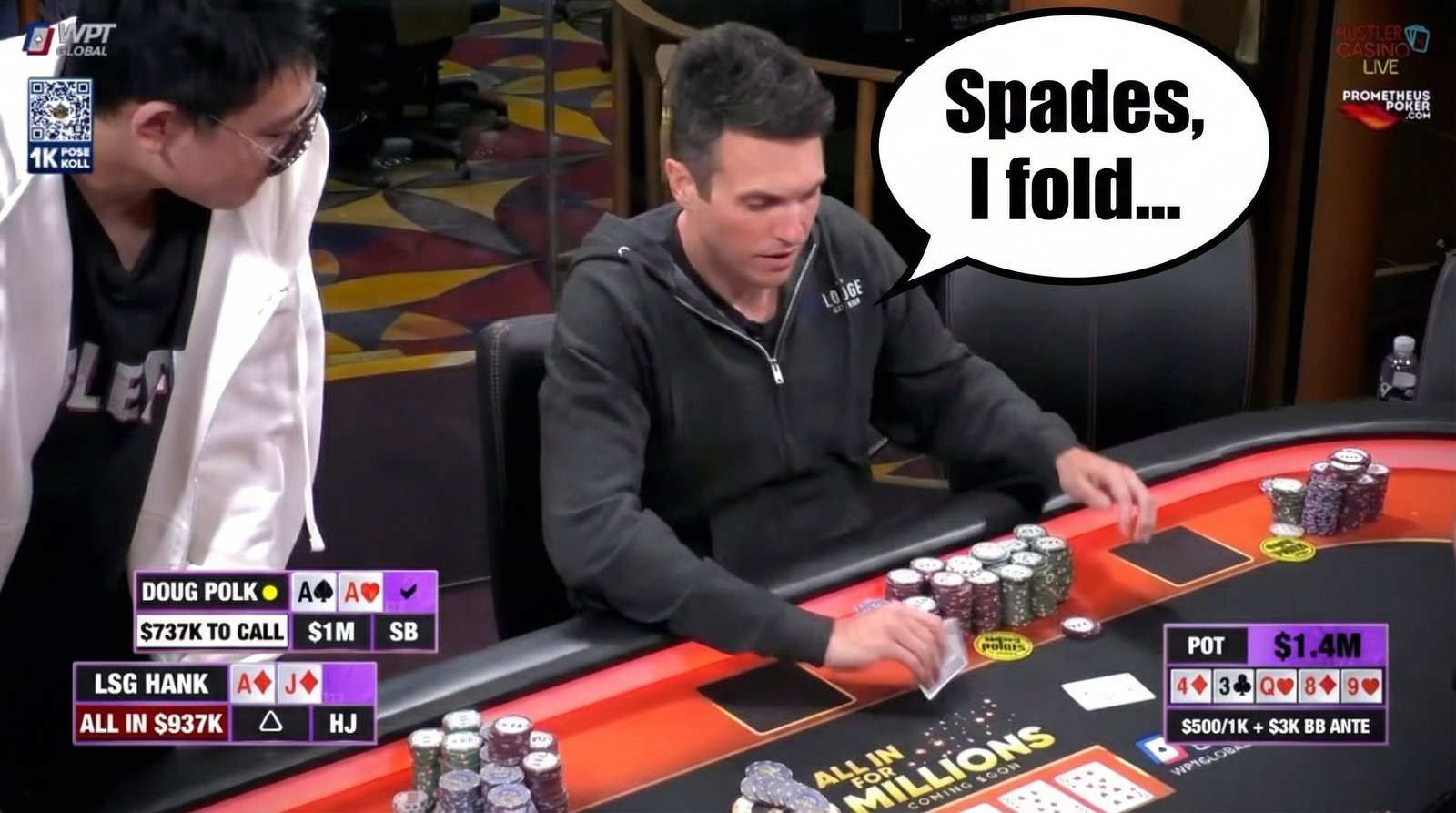
Building a Strong Default (The Exploiter's Paradox)
The counterargument to all of this could be that, if you're good enough to handle an RNG successfully, you're probably good enough to successfully exploit any player at the tables. This actually sounds like quite a valid argument; if you're good enough to be balanced or be GTO-aware, you're good enough to exploit, and you should.
That said, do you really always have 'the answer'? Perhaps an even better question: Are you always in the mood to be sharp-minded enough to only exploit, exploit, exploit? Do you always have the required information?
Perhaps you're early in a session and you like to sit back and gather reads. Or you're chilling in a low-stakes cash game or tournament, reading a magazine or playing chess on your phone, and you don't have the will to focus on your opponents (you're just chilling). Perhaps you want to play a low-effort but profitable style and default to a more balanced game using your RNG.
And lastly, you could be at the opposite end of the spectrum: at an insanely tough table or high-stakes game where you don't have all the answers. You may want to default sometimes to a more balanced approach; an RNG can come in handy there as well.

It is nice to develop a default style of play that is unexploitable. You may view it as a safety net, but you can also view it as a solid foundation to build the rest of your (exploitative) game on. You can always go back to your default for whatever reason: not having the answer, not being willing to, perhaps even tilt. The key is to understand that yes, most of the time your default game will not be the most profitable strategy in every situation, but it is a hell of a lot nicer than feeling lost in the game at those times where you're 'just not there', or not sharp enough. A default game can give tremendous inner confidence; your game is layered, has depth, and you can build yourself up into an infinitely strong, unpredictable, unexploitable, and dangerous player.
My Own Experience
Throughout my 20-year poker career, I kept leveling up my understanding of the game. I soon understood that Nash Equilibrium was a thing, and that our poker games should be balanced such that we should mix over actions. For a long time, I even used the suits of my cards to mix before getting an RNG.
Once solvers came out, it really became clear how mixing can be part of building a strong and balanced game plan. I downloaded a simple RNG widget and I haven't played a session without one since.
Here are some options for your online play:
-
Download the free RNG widget that I've used for years. It looks like this:
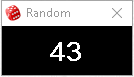
- Check out the Jurojin software. An RNG comes with it that changes on every turn.
Of course, live poker is a bit of a different beast. A lot of live players tend to rely purely on their exploitative capabilities. Live play is still deeply connected to 'street poker', and using an RNG to mix your actions is as far as you can get from street poker.
Still, there are some players (like myself) who want to be able to mix their actions, at least sometimes, at the live table. Maybe only for preflop, to at least keep those ranges balanced at the stage where all the options are still wide open and the answers are often most unclear, because the tree is still so damn deep.
Whatever the case may be, having an RNG right in front of us isn't really an option, and in some places, it is not allowed.
I thought long and hard about this problem. I even considered developing a physical bracelet to solve it. But then I started thinking outside the box: What if it could be audio-based?
The result is an app I created called Shark Whisperer.
You can run it in the background, letting random numbers be spoken into your headphones or earbuds at custom intervals. You can set the voice to your preference, and eventually, you just get into the flow; you don't really 'hear' the numbers anymore unless you specifically listen for them. I found this app really worked for me.

Conclusion
There are many reasons to use an RNG; it gives a solid base you can rely on. There is also a strong argument for casting it aside if you think you're good enough to reliably choose the highest EV action every time, and own everybody.
I hope this article gave you enough context to decide for yourself whether using it is right for you. If you've never tried it before, I encourage you to at least give it a try, to see if you feel it may lead you on a road to a more balanced but stronger game in the long run.
